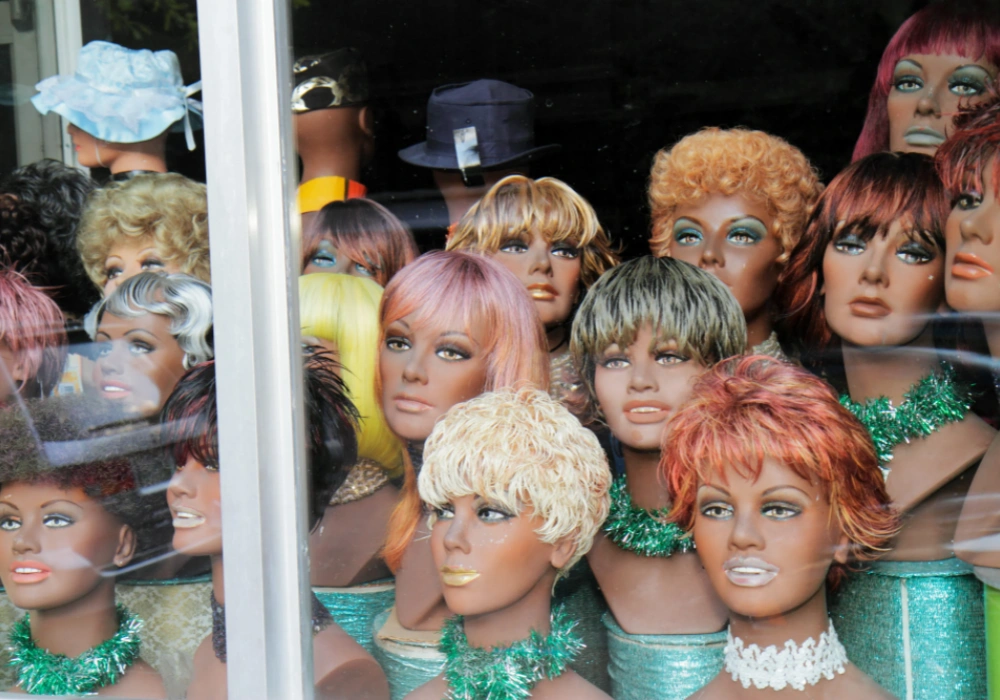
With the development of society and the improvement of people’s living standards, wigs have become a widely recognized and popular cosmetic accessory. In the process of using wigs, heat resistance and ventilative property have become issues that people pay close attention to.
Background Knowledge
The history of wigs can be traced back to ancient Egypt and Greece. However, it was not until recent times that wigs gradually became a popular beauty product with the continuous development of technology and improvement of craftsmanship. Currently, the wig market is very large, satisfying different consumer needs based on different materials, colors, styles, and functions.
Definitions and Factors Affecting Thermal Resistance and Ventilative Property
The heat resistance and ventilative property are important indicators to measure the quality of wigs. Thermal resistance refers to the temperature range that the material of wig can withstand, while ventilative property indicates the degree to which the material of wig can be ventilated. The heat resistance and ventilative property of wigs are affected by many factors, including material, thickness, temperature, and humidity.

Experimental Research and Data Analysis
To explore the influence of different factors on the heat resistance and ventilative property of wigs, a series of experiments were conducted. Firstly, five common materials in the market were selected: human hair, synthetic hair, pure cotton fabric, polyester fabric, and silicone wigs. Then, these materials were made into wigettes with the same thickness for heat resistance and ventilative property tests. During the test, different temperature and humidity conditions were set up to observe the influence of different factors on heat resistance and ventilative property.
After statistical analysis of experimental data, the following conclusions were drawn:
- Human hair and synthetic hair have better heat resistance and ventilative property, which are suitable for high-temperature and high-humidity environments;
- Pure cotton fabric and polyester fabric have good ventilative property but poor heat resistance, which are suitable for low-temperature and low-humidity environments;
- Silicone wigs have poor heat resistance and ventilative property but longer service life, which are suitable for low-temperature and low-humidity environments;
- When purchasing wigs, consumers should choose appropriate materials according to the use environment and requirements;
- Human hair and synthetic hair are suitable for high-temperature and high-humidity environments;
- Pure cotton fabric and polyester fabric are suitable for low-temperature and low-humidity environments;
- Silicone wigs have poor heat resistance and ventilative property but longer service life, which are suitable for low-temperature and low-humidity environments;
- For consumers with sparse hair or need to cover defects, thicker or special-shaped wigs are recommended;
- When purchasing wigs, consumers should choose legitimate businesses and brands to avoid purchasing inferior products.
More:The Differences Between Men’s and Women’s Wigs: Exploring Variances in Style and Construction