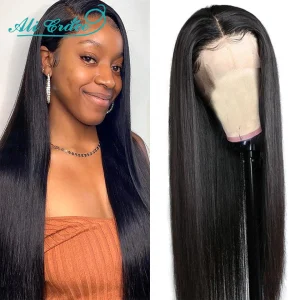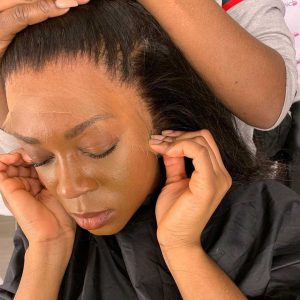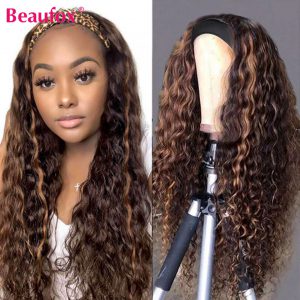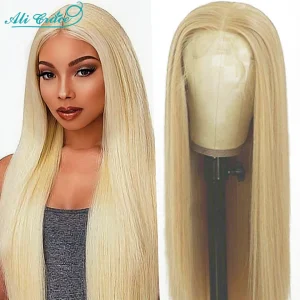
Wigs have been used for centuries to enhance beauty and disguise baldness, but with the advent of modern technology, it has become increasingly difficult to distinguish between real hair and wigs. Whether you’re trying to determine if your friend’s new hairstyle is a wig or you’re a wig wearer wanting to ensure your wig passes as natural, it’s important to know how to tell the difference. In this article, we’ll go over some key factors to help you distinguish between real hair and wigs.
Hair Texture
One of the most obvious differences between real hair and wigs is texture. Real hair has a unique texture that is difficult to mimic. It has natural variations in thickness, texture, and wave patterns. Wigs, on the other hand, have a uniform texture and appear more consistent in their pattern. Even high-quality wigs made with real human hair will still have a slightly different texture than natural hair, due to the processing required to create the wig.
Hair Movement
Natural hair moves and bounces in a way that wigs just can’t replicate. Real hair has a certain weight and body to it that allows it to move and flow, whereas wigs are often stiffer and lack that natural movement. Wigs made from synthetic materials can be especially stiff and difficult to move in a natural way.

Hairline
One of the most important factors in distinguishing between real hair and wigs is the hairline. Natural hair grows from the scalp in a random pattern, creating an irregular hairline. Wigs, on the other hand, have a very regular hairline that looks almost too perfect. This is especially true for cheaper wigs or poorly made wigs. However, higher-quality wigs can have more natural-looking hairlines, thanks to the use of lace or other materials that mimic the look of a real scalp.
Parting
Parting is another important factor to consider when distinguishing between real hair and wigs. A natural part in real hair will have some variation and imperfection, whereas a wig part will be more uniform and perfect. This is especially true for synthetic wigs, which often have a very obvious and uniform part.
Hair Color
Hair color is another factor to consider when trying to distinguish between real hair and wigs. Natural hair has a variety of shades and highlights that give it depth and dimension. Wigs, on the other hand, often have a very uniform color that lacks variation. This can be especially noticeable in cheaper wigs or synthetic wigs.
In conclusion, while wigs have come a long way in terms of quality and realism, there are still key differences between real hair and wigs that can help you distinguish between the two. By considering factors such as hair texture, movement, hairline, parting, and color, you can become an expert at telling the difference between real hair and wigs.