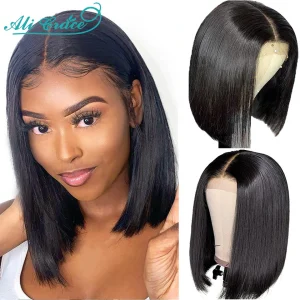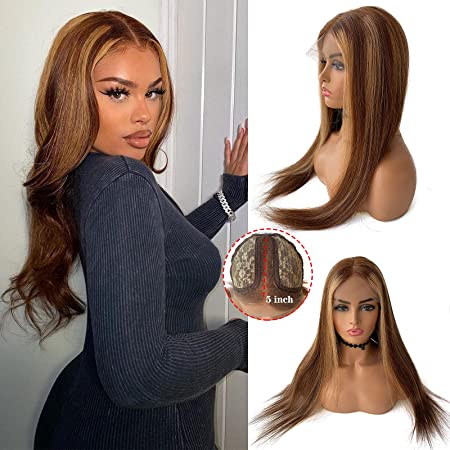
Wigs have now become one of the best-selling products in the world, but each ethnic wig consumer market has different classifications and product type preferences. Let’s find out together below!
Caucasian market and consumption characteristics:
Caucasians have fine, soft, curly hair in large waves. Childhood is mainly reddish brown and golden yellow, and adult hair colors are: white, gold, red, brown and black. There are many male baldness. Because the hair is soft and easy to break, there is a tradition of using wigs in Europe. Among the types of consumer products, hair extensions that can change the length and volume of hair are the most popular in the white market and are the mainstream of market consumption. There is also a fixed demand for hair sets and hair blocks.
Product type:
Most of the products are hair extensions, and there is a fixed demand for headgear and hair block products. There are many social gatherings and banquets in the European and American markets, and the demand for styling changes is even stronger. Hair extensions are basically fashionable fast-moving consumer goods in the European and American markets. Headgear and hair block products are highly accepted and widely used.
Consumption features:
Mainly mid-to-high-end products. High requirements for product quality, hair extension products mostly use high-quality human hair, and the service life is generally about 3 months. Head covers and hair blocks are mostly made of high-grade hand-crocheted products, which require high fidelity and quality.
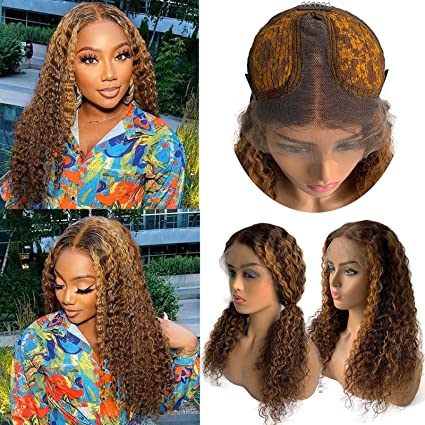
Black people’s market and consumption characteristics:
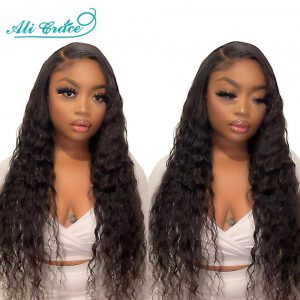
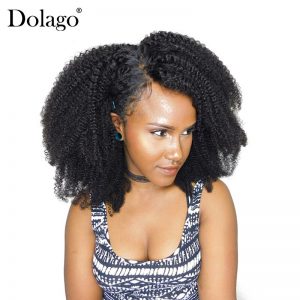
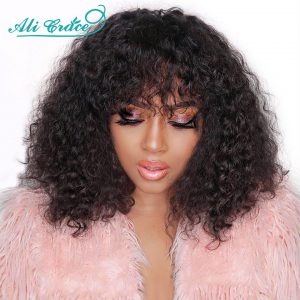
Black people have small curls and thinning hair. There are many voids around each curly hair, the voids are filled with air, and the air has poor heat transfer, so the curls have an insulating effect and protect the mind from heat damage. If black women love beauty and want long hair, they can’t do without the help of wigs.
Product type:
Black people have rigid needs for wigs, and headgear and hair extensions are necessities for black women.
Consumption features:
The black market is dominated by low- and medium-grade chemical fibers and human hair, and the demand is large, and customers are more sensitive to prices. Black wealthy women in Europe, America and South Africa have higher requirements for quality and prefer mid-to-high-end products.
Asian market and consumption characteristics:
Most of the people of the yellow race are distributed in Asia, and their hair characteristics are: black, long, thick, and straight. It can be said that they have the best hair quality among the three major races. At the same time, Asians are not prone to hair loss. In the 20-39 age group, 5% of Asians suffer from hair loss, compared to 26% of Europeans in the same age group. Among 40-59 year olds, 21% of Asians suffer from hair loss, while in Europe it increases to 50%. By the age of 60, 43% of Asians experience hair loss, compared with 68% of Europeans. Therefore, Asia has become the largest supplier of raw materials in the wig market. With the advantages of raw materials and processing, China has become the world’s largest producer and exporter of wigs.
Product type:
Hair sets and hair block products are in greater demand, and mid-to-high-end products are mainly decorative. Young people are more likely to choose hair extensions. Due to the characteristics of their own hair, Asians do not have high requirements for the quality of hair products, and there is no hair extension product brand like Europe and the United States.
Consumption characteristics:
The consumption of wigs in Asian countries has a lot to do with the country’s economic development. The wig markets in Japan, South Korea and Singapore are relatively mature. In other countries, including China and Southeast Asian countries, with the improvement of economic level, the wig market is gradually improving with the development of beauty and hairdressing markets.